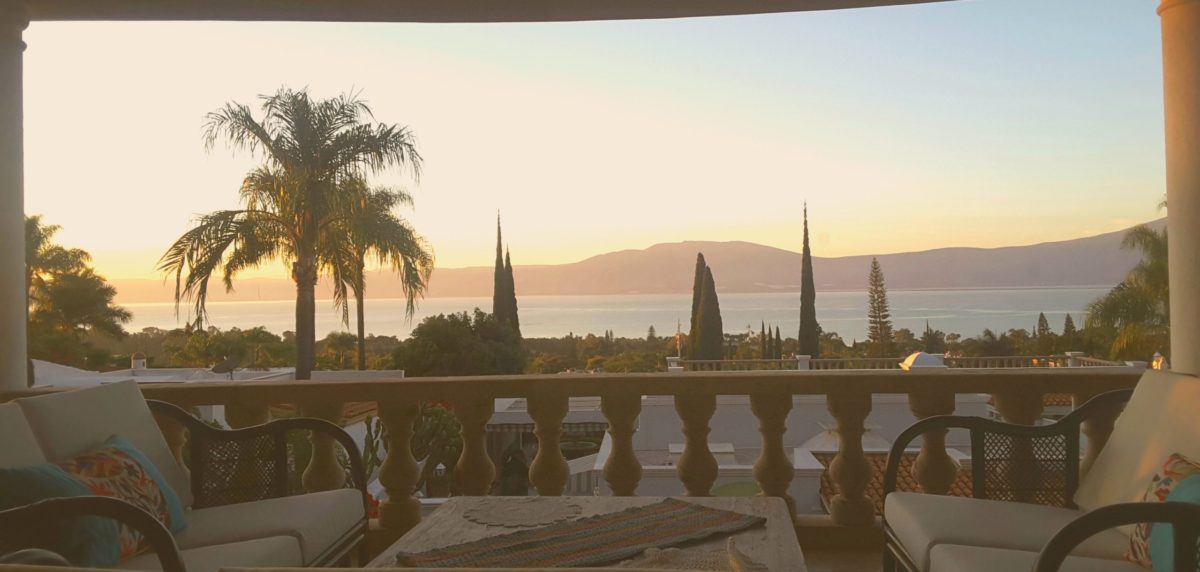
One stark challenge facing an expat is “how does one make new friends?” It is easy to forget how dependant we all are on our extended series of relationships: our friends. Leaving your friends behind–the people from your hometown, where you worked, where your children grew up–can be daunting enough, but is easily surpassed by the next step: where to find a new group of friends?
I had a lot of experience making friends growing up. In the seventeen years between my birth and taking the oath on the Plain at West Point, my family lived in eight different houses. Which may not seem that dramatic, but it also included one, six-year stretch in a single house! I attended three different high schools. I pretty much dreaded most moves, since as a card-carrying introvert each move required the dreaded “hello, I am the new guy here, please be my friend” routine. I finally mastered the process at my last high school, and it served me well in a brief military career.
Then Judy and I settled into Washington, DC, for the next thirty years. We did move around, gradually pulled ever closer, inside the beltway, like some comet being sucked into a black hole. Overstatement? DC is the place famous for Harry S Truman’s apocryphal quote: “If you want a friend in Washington, get a dog.” He didn’t say it, but it lives on because so many Washingtonians recognize its fundamental truth.
The answer is the same as it always was: to get out there and find people with similar interests. The challenge as an expat is exacerbated by the twin aspects of foreign languages and cultures. As Sam Cooke crooned:
Not really about friends, but you get the point!
“If I can meet ’em, I can get ’em, . . .” Luckily, an expat lakeside has numerous opportunities to meet people. This probably is the ‘secret sauce’ explaining why Lake Chapala is such a draw for North American expats. An expat here has all the ability to engage that friendly Mexican culture I wrote about earlier, but also can rely on a huge number of English-friendly groups and activities.
Our weekly English-language newspaper, the Guadalajara Reporter, lists fifteen different religious services each week, as well as some spiritual-but-not religious activities. We have at least three dramatic theaters, two cinemas, and several galleries. There are numerous classes for dance, crafts, languages, card games, and groups galore, ranging from a motorcycle club to Democrats Abroad. El Ojo del Lago, our monthly periodical, has two solid pages (small print) of non-profit organizations full of active individuals performing good deeds.
It’s digital: blow it up if you want to peruse the offerings!
Several expats acquaintances tell me that our area and San Miguel de Allende (SMA) are similar in that they both have well-supported expat infrastructure. Those who started in SMA but ended up lakeside say SMA is more stratified, more expensive, more cultured, and just busier. I’m sure the reverse set of expats (Lakeside>SMA) would call lakeside too blue-collar, too provincial, too small-towny. For beach-going expats, there is always PV, the Cabos, Cancun and Cozumel and Playa del Carmen. Merida is up and coming for a more authentic, but still tropical, experience. To each his own. Whatever your take on expat life, there are several locations in Mexico to try out, but not all have the same welcoming infrastructure!
The feel of warmth from camp fires roasting marshmallows. The aroma of turkey cooking in the oven. The sight of browns and oranges and reds and greens in the trees. The sound of a leaf’s crunch underfoot. The taste of pumpkin, naturally. The sense of summer gone, winter too soon arriving, yet an interlude of good weather and even better holidays.
Avocados available, year round
We don’t have Fall here in Mexico. There’s a word for it (otoño) and officially it is a season, but otherwise hard to distinguish from the rest of the year. The plants flower, fruit and drop their flora when they will. The bugs are always with us, although the mosquitos do seem a little easier to swat nowadays. This close to the equator, the daily dose of sunshine is nearly a constant. Oldtimer expats swear it changes by many hours, perhaps body memories of days gone by in the States or Canada.
We expats mostly know the rhythm of the rainy and dry seasons, which just tells you whether you need to remember to water your garden plants. As retirees, we have no work rhythm either, just six Saturdays and a Sunday (for those hold to a Sabbath of some sort). This makes the traditional holidays almost sneak up on you, as you lack those climatic hints and Mexican culture hasn’t quite embraced the omnipresent marketing NOB (are the Xmas decorations up yet?).
Plums, too!
Fall always was my favorite season. Perhaps living near DC, this was inevitable, since Fall is the one season where the swampy Potomac marshland that became the nation’s capital is habitable. In Fall the tourists were (mostly) gone, the students were (mostly) in school, the politicians were (mostly) away campaigning, and the money was (mostly) spent (Note: the federal fiscal year ends on 30 September), so there was a normalcy to match the decent weather.
This one has the Fall spirit, several times a year.
I wouldn’t say I miss Fall. I can still visit it whenever I want. When we took care of the grandkids last week, the leaves were turning, and that last morning, before the crack of dawn flight out of BWI, the dawn air was crisp and clear. We’ll be back again in November for early Thanksgiving, and those tastes of Fall are plenty. When the climate is as special as it is here lakeside, the sameness of the days are a blessing, not a curse.
We’re coming to the end of two weeks of substitute parenting. Grandparenting is still my favorite role, but this wasn’t a bad gig, either.
Henry doing the whole Big Brother thing at the bottom of the slide for Quinn
When I thought about the concept, the example which sprang to my mind was substitute teaching, which has so many challenges. Face it, the very concept of substitute teacher has yielded several movies which play the theme for laughs or tragedy. Yet substitute teaching has a few advantages, too: you’re not responsible for the ultimate success of the students, after all. You don’t have the built-in biases which develop seeing the same students behaving in predictable patterns day after day. There is a set term measured in hours or days, not weeks or months.
Henry and his Meemo, on the perilous swinging bridge
Substitute parenting has some of the same advantages. I don’t need to fix anything, just survive and ensure my grandkids do, too. Not that my Henry Danger and Quinn Rebel (real names, not aliases to protect the innocent) need any fixing, mind you. Oh, no, they were angels . . . of a sort. I believe Lucifer was one, too, once upon a time. For their part, I am sure they found this semi-parental version of “Gramps” far too stern. Several times they looked at me like “what, you can’t be serious” when I gave them some direct verbal order . . . they seemed unfamiliar with the concept. One time Henry even said the same out loud. That’s when the grandparent overcame the parent in me and I just laughed out loud.
Henry enjoyed following the marked path; he was less happy when Gramps decided to go cross country
Survival is a low bar, but necessarily so. Have you seen what passes for toys today? Henry got nerf guns for his birthday. They come with safety glasses, magazines (the kind for extra ammo, but the guns were revolvers, so what the heck?), a Captain America shield and a utility vest. “Great,” I thought, we’ll try a little live-action, first-person shooter game. Since I wanted Henry to “gear-up” I decided to wear the safety glasses, too. Good move! Within five minutes, I had an enormous fat lip and would have been short one eye if not for the glasses! My girls had nerf guns back in the day, but the nerf arrows flew so slow you could dodge them. Not so today: these nerf bullets were lightning fast, accurate to the sights on the barrel, and packed a punch (according to my swollen lip). Henry learned that if your head is bigger than your shield, you will get shot in the head. Valuable life lesson there.
We went to the Church picnic, where I confirmed that all Church picnics everywhere are similarly disorganized. Food was cash-only, but then you needed to buy tickets for the cash-only food. Except they were out of hot dogs. At the Church picnic. For kids. But we were able to let Quinn run free on the playground and practice her climbing skills (very important, as she is three and ready to escape her crib. No need to thank us, Mom & Dad!).
So if Mom & Dad don’t respond quickly enough, just find the toe holds on the side of the crib. . .
Mostly we just followed the routine set down by their parents, and when we deviated even a little, Quinn & Henry were quick to point it out. The grandkids were willing to accept some small changes, but vigorously protested others. Judy took to responding “oh, well” when appeals to rationality or authority failed to convince them. Quinn found that amusing enough to quote it back to us when she didn’t like the outcome. Did I mention her middle name is Rebel?
Like I said, a good gig, only a few melt-downs (the kids, not us), no emergency room visits, and now back to GRAND-parenting.
Back in the States briefly to do some grand-parenty things, which brings a heavy dose of perspective. Bottom Line Up Front, as we used to say: all the things you endure as parents, when time and patience are limited, become luxuries to enjoy as grandparents.
I watched grandson Henry at basketball practice the other: ten six-year olds with one coach, trying to learn the fundamentals. That coach must have the patience of Job. It brings to mind the old joke about monkeys and a football (Google it; I can’t repeat it here).
Henry (#5, gold) looking all basketball player-y
We didn’t have such “youth sports” back in the day: sports started mostly around 5th grade, when the boys acquired sufficient motor skills–but not enough self-discipline–to play. I grew up in Indiana, where basketball is and remains king. You played basketball, or got beat up and called words which aren’t socially acceptable . . . today.
I recall practice being good preparation for the Military Academy: endless exhausting drills with much screaming and questioning of one’s manhood (remember, we were ten year olds). After enough berating, we could enjoy a little scrimmage, although there still was the terror of the coach blowing his whistle and yelling “freeze,” which induced a Pavlovian mixture of fight-or-flee. We had to stop exactly where we were, so the coach could point out some crime against humanity one–or occasionally all–of us had committed. Then it was back to the joy of the game.
Henry and his friends had no such experience: it was all joy. They travelled with abandon, shot when they should have passed (and vice versa), and sometimes wandered off into private flights of fancy. One young lad took a break from the action literally, heading to an empty space on the court to do a little break-dancing.
I recall taking my daughters to basketball practice so many years ago: a change in type and kind, since girls were left out back in my day. I knew they didn’t need the drill school I experienced, but what exactly were they doing? Team sports are an important part of growing up, but how much pressure to exert on skills versus fun? I over emphasized the former, but they had plenty of the latter. They couldn’t possibly imagine how much of an evolution that was!
Organized sports, especially Indiana basketball, was all seriousness growing up. We remembered the scores, the good and bad plays, the missed shots. In my case, especially the missed shots. I had what you would call substandard athletic skills. Okay, I had none. To borrow the Rudy quote, even in college I was ‘five feet nuthin’, one hundred and nuthin’, with barely a speck of athletic ability.’
I became adept at using my skinny lil’ bod to block out, because there was no other way I would ever get a rebound. I learned that if you ran fast enough, you would get a fast break leading to an uncontested lay-up, which I shot successfully around 50% of the time. Which was an improvement from any other shot I attempted, including free throws.
Basketball games were a mix of anticipation, adrenaline and pure fear at how I might screw things up this time, but still in some ways I enjoyed them. And it was a sport I was able to really enjoy when I finally grew into an adult body sometime in my twenties.
Was that high pressure approach wrong? Is today’s Let it Be better? I dunno. If you survive missing a tying free throw with a second on the clock in a crowded auditorium, life’s other strained circumstances are a little less apocalyptic. Still, screaming has never been an appropriate form of leadership (drill sergeants excepted), so why would it be for kids?
Most expats at lakeside quickly adopt the refrain that life here is wonderful. Soon after, they start to lament all the newcomers and changes ruining paradise. I’m a little guilty, too, though I resist falling into the trap mightily.
You knew this was coming . . . RIP, Ziggy Stardust.
I am less of a “close the door behind you, and please, everyone go away” expat and more of a “change is inevitable” one. One hopes for the best and prepares for the worst, as they say.
What’s new in the few years we’ve been expats? Plenty, just in a physical sense. Due to the growing demand of (relatively) wealthy expats with need of medical services, we now have:
A new hospital, and
a new cardiac clnic, rising behind the old facade of a car wash (in yellow)
a senior living facility, under construction. Think they’re marketing to gringos?
Restaurants come and go (as in either move or close) all the time. Old timers blamed the boom and bust cycle of the off-season, when part-time expats flock home. We full-timers enjoyed the quiet time and the ability to drop in for dinner without a reservation, but it was hard on the business owners. Seems like there is no off-season any more, just “way crowded” and “less crowded” periods. Which should have helped the restaurants, but now land owners have started hiking rents by as much as 50% a year! So a restaurant which was marginally profitable a year ago might be priced right out of its location.
Retail locations continue to grow along the carretera (main street). Sometimes we have a case of in-fill, where a small lot blossoms into a retail complex, but otherwise the development grows like a vine alongside the road between Ajijic and its nearest neighbor, San Juan Cosalá.
Once an empty corner in town, soon to be a shopping center
Mixed use shops and apartments (where are the apartment windows?) next to Walmart
West of town, this farm field is about to become a materials yard.
There is a constant need for more and different housing, both for the torrent of expats discovering lakeside and the Tapatios who want nice weekend retreats.
This was an empty field when we bought our home. Now its a muy moderno subdivision.
Anecdotally, I’ve heard prices have gone up so much that the rental market is beyond the reach of locals, and many long-time residents have given up resisting the prospective fortune they own by selling and moving out. It is the challenge of living where so many other people want to live, even if in doing so, they change the character of what they sought. It’s the Heisenberg Uncertainty Principle of living in paradise.
As Don Henley sang long ago, “you call some place paradise, kiss it goodbye.”
The development is for the good. In the past, our hospital (really more of a clinic) immediately sent emergency cases via ambulance to Guadalajara, but now they can be treated here. Eventually, the demand for housing will result in a demand for better services (like roads, trash collection, etc) although the lag will be considerable.
Even in the two and a half years we’ve been here, the physical scene has changed considerably, although I think the essential character of the place remains the same. The local pastor told me Ajijic is unique, in that there are three different villages: the locals whose families have always lived here, the Tapatios who vacation here on weekends and holidays, and the expats, both temporal and permanente. The mix remains about the same, and the three “thirds” still get along.
Paradise is a state of mind, after all. Oh, and the first rule of Paradise is (wait for it) like Fight Club: never talk about Paradise!
One thing that strikes tourists and expats alike is just how friendly the Mexican people are. That friendliness stretches from the mundane to the extreme. People greet each other throughout the day, with a “buen dia/tarde/noche” as appropriate. This may be becoming a rarity in the largest cities, where urban dwellers adopt the instinctive distrust of strangers the world over, but in small and mid-size towns, you talk to strangers. This is superficial, it’s true, but it evinces a culture’s approach to others.
Absolutely nothing to do with friendliness, but we had globos overhead yesterday!
Many visitors of all types have stories of a car breaking down somewhere in Mexico and the resulting group effort to fix the flat or find the part, which involves lives disrupted, friends marshaled, cousins called in, food shared, and eventual success with the absolute refusal to accept any payment for services rendered, time spent, or disruption caused.
Just a few weeks ago, we were looking for a specific grocery store in a giant plaza in Guadalajara, following the well-placed signs in the parking lot, which led us to the bottom of a parking garage and . . . no grocery store. But we did see the ubiquitous “car -washers,” Mexican men with rags and buckets that cheerfully offer to wash your vehicle while you’re shopping. We flagged them down and asked for directions, which they rattled off far faster than we could comprehend. We thanked them, then started to drive off, when we realized the man giving us directions had begun to sprint up the garage ramp, where he stopped and waved us on. We followed as he deftly dodged between lanes and pointed us around corners until we were in sight of the grocery, then he doubled back before we could even give him a final “gracias!”
Friendliness does have its downside. Despite that last paragraph, one generally does not ask locals for directions. Why? Because they are too friendly to say they don’t know where something is, so they give you directions to something like what you want, or to somewhere where other people are. In a similar vein, most Mexicans hate to say “no” as it feels impolite, so they often mean “no” but say “yes.” So you may ask if they can make something, they tell you yes, but then never get around to completing the deal, because they don’t really make such a thing. On the flip side, if you’re in a restaurant here, and happen to order something they’re out of, or that’s not on the menu, your waiter might still say yes. If you watch carefully, you will see someone from the cook staff sneaking out to the store down the street to buy the ingredients!
Most often, the friendliness of the Mexican people is abundant. Expat friends of ours tell us that they visit our local club, which sometimes hosts huge weddings for Tapatios (from Guadalajara). Many times our friends get invited to join in the fiesta. Not wedding crashing, mind you, just hanging out nearby, and of course, you must fiesta!
Mexico’s legendary friendliness is not just based on anecdotal evidence, although there is plenty of that. Internations, a global expat community, conducts an annual survey among expats, and Mexico perennially ranks first for the ease of making friends with locals and friendliness in general. And by friendliness, I don’t mean that false–almost obsequious–friendliness one encounters at an all-inclusive resort. There, employees are coached to bend over backwards for any request, and to do so with a smile. Out in real Mexico, the friendliness is more akin to treating others as you would like to be treated, and welcoming a visitor like family. It is not as if there isn’t the occasional rude waiter or smiling con artist, but that such people stand out most for not being common.
College football is back, which has fans everywhere saying hello to another season. So why am I saying goodbye?
If you watch any football game this year, you might notice something different about the uniforms: college teams have a patch celebrating 150 years of college football, while the NFL sports patches memorializing 100 years of the professional sport.
That’s not a typo: the amateur game preceded the pro one. In fact, college football was the second most popular sport in America in the 1920s (behind the national pastime, baseball, and just barely above boxing). Pro football at the time was a novelty, a sport with young men who should be working full time but instead continued to play football while holding down odd jobs. Pro football didn’t become the popular juggernaut it is today until well into the 1960s: the first four Super Bowls weren’t even officially called that!
The college game’s popularity transcended its elite beginnings as a sport mainly played by the well-known Eastern universities. How? Partly because even if the vast majority of people did not go to college, every family was proud of some relative who did, and adopted a university as a result. Additionally, colleges presented the sport as a manly ideal, where otherwise regular students demonstrated their masculine qualities on the “field of strife.” This was appealing because it presented the students as selfless teammates contrasted with the mercenary professional players. Finally, the sport prospered on regional and ethnic rivalries, so anybody could join in by taking sides and rooting for the (good) local squad and against the (evil) hated rival.
To maintain the distinction between the professional and amateur versions of the game (and to protect the latter’s popularity) the colleges developed rules for eligibility. The players had to be students, but could not have tuition paid by the school: the very idea of an athletic scholarship was forbidden as a contradiction in terms. Rather, schools were allowed to arrange work-study and other reimbursement programs to pay for the athlete’s tuition. However, players caught moonlighting for local professional/semi-professional teams could be disqualified, as it muddied the distinction between the sports.
Predictably, this approach led to elaborate cheating scandals: everything from make-work “jobs” at the university to state schools putting the entire team on the state payroll for essentially no work. This led the colleges to flip the paradigm, prohibiting any outside payment, but permitting the concept of athletic scholarships and promoting the notion of student-athletes. Once on scholarship, “student-athletes” quickly learned how to avoid taking classes, which led to more rules on minimum GPAs, semester loads, and graduation criteria.
There was always some level of rules-avoidance (nay, cheating), but the system held together in the main. College football remained a very unique and distinct sports phenomenon. But then a ton of money got involved. Where did the money come from? Ticket sales (80,000 fans x $200 tickets x 7 home games = $56 million a year), television rights, and merchandising. Once upon a time, the colleges regulated how many games were televised and how often teams were on “national” television, with an eye to preventing an unfair advantage in publicity. With the advent of 24 hour programming, ESPN and other networks made offers the schools couldn’t refuse, sending hundreds of millions of dollars to the institutions and making virtually every game available to fans on television.
Where did all the money go? College football became big business. Very big business. How big? The highest paid state employee in 31 states is the head football coach at one of the state universities (in eight more it’s the basketball coach!). Athletic departments expanded staff, facilities and amenities in a continuing competition to have the best. Currently, the reigning NCAA Champion Clemson Tigers have the best football-only facility (cost: $55 million dollars), which includes multiple pools, a nap room, mini-golf, and video games for the players.
Overall football scholarships actually declined from 105 (1973) down to 85 today due to the necessities of Title IX compliance, but rosters remained around 125 players: enough players to fill out 6 complete squads. The players went from seasonal performers to a year-round regimen: summer school to keep eligible along with unofficial summer work-outs (sometimes supervised by coaches), specialty clinics and expert training, then Fall camps, the regular season, finally post-season bowls and play-offs, then Spring football and more class work before starting the cycle again.
Funny if it wasn’t so sad!
The players got tuition, and eventually a stipend, and some freebies, but no pay; they were instead given the opportunity for a quality education. But just the opportunity. Given the demanding athletic schedule I outlined, serious academics were a luxury. Some schools shepherded student athletes into “gut” programs which kept them eligible but didn’t result in an education or a useful degree. Every school could trot out a star player who was also an Eagle Scout with a 4.0 GPA in Electrical Engineering: with 125 football players, you’re likely to have at least one. Meanwhile, many other players were only graduating in name, and others proved to be illiterate despite their degrees!
Meanwhile, the universities were reaping huge payouts . . . sort of. While some of the math (like the ticket example above) is pretty simple, there is no universal standard for reporting revenues and costs. Schools build ever-larger stadiums and keep the costs off the athletic department books or add in classrooms as a cover. Private schools can remain mostly mum. Even state schools can do things like reporting every athlete as “costing” a full scholarship at full tuition (sometimes out of state) when in fact, they “cost” nothing. Other schools move most of the athletic department into a privately-held association, avoiding both financial scrutiny and skirting the transparency requirements of any state “sunshine laws.” Large, successful programs make a lot of money, while smaller and less successful ones play along and hope for a windfall season.
Nicolae Ceausecu Memorial Stadium in South Bend . . . see the classrooms? Lotsa classrooms!
The players have taken the NCAA and the universities to court for the right to make money off the merchandise bearing their name and likeness or to just be compensated as employees. The results are mixed, but the cases and appeals are heading in the direction of allowing pay and benefits. The NCAA has preemptively increased direct stipends and allowable benefits in an attempt to avoid the inevitable. But the path forward is clear: since the academic institutions have treated college football (oh, and basketball, too) as a business, eventually the courts will insist student-athletes get their share.
So what? Back in the day, players walked off the field and got “golden handshakes” when wealthy alumni shook hands and palmed a fifty or a hundred over to star players. But the advent of a full pay-for-play era will tear up the existing system. It is a change in type, not in extent.
First off, some schools have ruled out paying players. My Notre Dame, Northwestern, Stanford, Duke, Wake Forest, Vanderbilt, the Service Academies, Boston College and the “Big 10″conference so hold, so they say they will not compete in an association (the NCAA) which does. In the era of paying players, small schools who don’t make much money may want to pay, but will probably have to drop out of the arms race (remember, their costs just went up). But this won’t stop the biggest schools and football factories: they will revel in the newfound freedom to emphasize the sports. What they don’t understand is the amateur nature of college football–even if it is a charade at times–is essential to its log term success.
The current useful fiction retains the patina of “student-athlete” from the past, so there are rules (even if fudged). Once the student athletes are employee-athletes, the university can’t make arbitrary rules about school attendance a condition of their football (work) performance. As one athlete already noted,
He did graduate, after all.
For the pay-as-you-go teams, they won’t immediately drop all pretense of student-athletes. They will probably start with limits on how much athletes get paid. But the amounts of money involved are large, and therefor largely corrupting. And if it’s a business, business rules (e.g., labor rights, antitrust laws) apply. Eventually, they must allow for the possibility of non-student athletes, but perhaps limit the numbers. Schools will avoid some limits by having teams associated with the university (The Gators associated with the University of Florida?). How will they limit how much a school can offer a high school recruit? How about an overall salary cap? Players will be free agents, changing teams/schools for better pay or more playing time: you can see the beginnings of that in today’s transfer portal.
College football will still be popular, and it will still make money. It will avoid the fake-student scandals of the past, although it will doubtlessly invoke new ones (look at college basketball, which skips the pretense of student athletes but must deal with many other problematic behaviors). Instead, college football will be what some already charge it is: simply a minor league for the NFL, only one with some odd attachment to places called “institutions of higher learning.” That will be a loss for the fans, the students, and the sport.
As Joe Walsh crooned in the same song, “I can’t complain, but sometimes I still do . . . “
Friends have admonished me for the negativity of my recent posts; I plead guilty. I was–after all–an intelligence analyst for almost forty years, and when I spoke publicly about it, I almost always used this joke: “An intelligence analyst is the type of person who—when he smells flowers–looks for a casket.”
But life IS good, even if “sometimes I still do (complain, that is).” What’s so good about it?
The weather has returned to its normal spectacular. The climate is so good here we get spoiled, and a few hot/sunny or cloudy/rainy days become a national tragedy. It’s cool (60s) in the morning, gets sunny and warm (80s) in the afternoon, then cools quickly in the early evening. Passing storms appear and disappear in the late afternoon-through evening-to early morning. Mostly they present spectacular lightning displays over the lake.
We have a special word for this: it’s called Thursday.
Close-up of leaf cutter ant
I seem to have won my war with leaf cutter ants. For those unfamiliar, leaf cutters are the plant world’s version of the creature from the Alien-series of movies: a relentless killing machine that turns beautiful tropical foliage into a bunch of naked sticks-n-stems overnight. They had so denuded my jasmine plant thrice before I caught on. Like Ripley, I nuked them from orbit (“it’s the only way to be sure“) using a product called Trompa which they take back home to the evil queen and die, already!
Like Aliens, they’ll be back, but for now I can smell the jasmin!
If you put your nose up to the screen, you’ll smell it, I swear!
College football season begins this weekend, and all teams not named the Miami Hurricanes are still undefeated. Canes fans can take solace in the fact that they assaulted the band director of the Florida Gators: keep it classy, UM! Anyway, certain defeat lurks somewhere in the distance, but for a brief moment all fans can dream bigger dreams. I don’t know how many more college football seasons there will be (topic for a future post), so enjoy it while you can.
We’ve started to explore more of Guadalajara. Any town with five “a’s” in eleven letters deserves to be investigated. Many expats avoid it: too big (mas que cinco millones), too many cars, too Mexican (what?!?). We have been attending Mass up there, and then checking out new restaurants, shopping, etc., and it has been a very positive experience. We hit City Market last Sunday, which is sort of a Whole Foods on steroids. We sat at the lunch counter and ordered tapas and coffee. Since the coffee was served from the cafe, our waiter went over there to get it and bring it to us, along with some complementary chocolate croissants. Then we went grocery shopping on a full stomach–highly recommended over the alternative.
Judy & I are in great health: eating better and exercising more than ever before. We still eat out almost every day, and there are always new restaurants to try, even in our little town. We hit two more news ones (a creperie and a Tex-Mex one) recently. Judy got me to adopt walking laps in the pool. I always resisted this as something only ‘rehabbers’ and people “exercising without sweating” did. One more thing to be wrong about. It is very solid exercise and you leave feeling refreshed; who knew? We’ve even kept up “playing” tennis, which is to say we spend sixty-to-ninety minutes each Friday trying to volley the ball over the net. No score, no rules, just racket-and-ball-and-go! Good fun, better exercise (since we never know where the ball will go). Judy now has tennis outfits, so she looks marvelous, too! I got tennis shoes. I had tennis shoes my entire adolescence and never played tennis. Now these two parts of the my story have aligned.
Our Spanish language lessons continue, and while some topics are very frustrating (how about the seven different verbs they use to convey the verb “to become”?), we can now hold a conversation with locals, as long as they verbally downshift to second gear. We had a young waiter in Guad last week who spoke supersonic español: I think he was trolling us! Yet it is nice to be capable of basic interaction, even with our limited vocabulary and gringo accents.
We got hit with something called DAC, which is the Spanish-language acronym for overuse of electricity, resulting in a triple rate charge. I guess it was the air conditioner use back in May/June; while it irritated me to no end (I have solar panels!), the triple charge resulted in a monthly bill of (wait for it) about $75 USD. I doubt I ever had an electric bill that low in the States. So even the bad news has a silver lining.
So, yes, I can’t complain, but sometimes I still do . . . just with a sly grin.
Statistics are funny things. Done correctly, they have an unarguable standing, yet a clever person can use them to prove damn near anything. As Disraeli said, there are “lies, damn lies, and statistics.”
If I asked you to complete the sentence “the greatest threat to human life today is ________”, what would you say?
Based on the headlines, some might say gun violence. After all, there seems to be another mass shooting every thirteen days (a true statistic, depending on definitions) in the US. Despite the news coverage and the pathos of each of these attacks, the number of victims is still small (102 fatalities so far this year, another true statistic). Gun enthusiasts will remind all that the vast majority of guns are never used for a violent act (true), yet gun control proponents will counter that the most common use of a gun in your home (in the United States) is to kill yourself, a close friend, or family member, not a robber (also true).
Parents are buying bulletproof backpacks for fear of school shootings. These same parents blithely give their teenagers cars and smart phones, despite the fact that these two objects combine to kill ten teenagers every day (due to distracted driving).
Concerned for gun violence: quite valid. Worry? Maybe about the underlying causes.
People with a longer timeline might say climate change is the biggest threat. The violent weather and social disruption envisioned under most climate change scenarios is certainly a vivid threat, but sudden climate change remains a thing only in (bad) Hollywood movies. The imminent threat claim mouthed by politicians–you know, that we have only ten or twelve years left on the planet–has been rejected by the UN Intergovernmental Panel on Climate Change (IPCC).
What their report states is we have no time, since climate change is already here. If you live in New York or LA, you’re already experiencing the +2 degree centigrade average temperature increase that is the benchmark for climate disaster. But the IPCC states that dramatic efforts to reduce carbon emissions could (by 2030, hence the ten-to-twelve years stat) save us from even worse effects, when the rest of the world catches up to +2. No one knows exactly how bad things will get, or when or where the worst effects will hit. Threatening indeed, but the imminence is a call to action, not despair.
What I have in mind is a threat already lurking, with the possibility of sudden emergence. So let me give you something new to worry about (right, because that’s what we need, another existential threat!). I say new, but that is only true if you’re younger than ninety-one years old (That’s a hint).
Prior to 1928, the most common cause of death worldwide was . . . infectious disease. The most common cause of death among children, the most common cause of death among soldiers, the most common cause of death among any group of human beings. The average life expectancy in the industrialized world in the 1920’s was approaching forty-nine years. It had inched up due to cleaner water and public sanitation, but was still low by modern standards.
1928 was the year Alexander Fleming discovered penicillin, the first antibiotic medical treatment. The antibiotic qualities of some substances had been known for hundreds of years, but Fleming’s discovery was a mass-producible treatment which went widespread among the Allied armies in Wold War II and then everywhere else after the war. Prior to modern antibiotics, a cut or abrasion gave you a distinct possibility of dying. Gathering in large groups with poor sanitation risked the same. Your grandparents or great grandparents thought of hospitals as places where injured people went to get fixed up, but often got sick and died there. This wasn’t superstition: it was lived experience.
If you’re ninety-one or younger, you have lived entirely in the antibiotic era, which was different in type from previous human history. Life expectancy in the developed world shot up after 1928, gaining upwards of 30+ years in the next six decades! Antibiotics (and a better understanding of the bacteria they fight) was a major cause of this improvement. Proof lies in the fact that infectious disease remains the scourge of developing countries where antibiotics are unavailable.
The bad news is that evolution still holds, and bacteria, having countless numbers with which to experiment, are winning. Antibiotic resistant bacteria are popping up with increasing frequency, all around the world. Most of our antibiotics were developed in or before the 1970’s, the so-called “golden age of antibiotics.” But we misused them, using them to treat viral diseases (they don’t work against viruses), to fatten up farm animals, to mass spray and protect crops, in inadequate dosages or after they were expired, washing them down the drain where (other species and) bacteria were exposed. And survived. And evolved. And grew stronger.
There are new antibiotics in development, but of only a few new types. We have learned that bacteria are most vulnerable when hit with several different classes of antibiotic approaches at the same time: this complicates their natural selection, and buys us more time. So the new antibiotics are just a delaying action, and we don’t know how long before some truly deadly, easily transmitted disease beats the current set of “last-ditch” antibiotics.
What is a post-antibiotic world like? For a recent example, read about life during the Great Flu Pandemic of 1918. Granted, that was a virus, not a bacteria, but still it shows how an unchecked disease completely shuts down a modern society, and how social norms dissolve in the process. And that was just a 10-20% mortality rate. For a slightly more troubling scenario, read about the Black Death in Europe in the 14th century, where mortality exceeded 50% and the surviving remnant society was totally changed.
Unfortunately, there is not much an average person can do about the bacterial threat. Don’t ask for antibiotics when you probably have a virus, don’t use them when expired (or flush them down the drain), oppose policies of mass use for livestock or agriculture. Pretty small potatoes, what? That is what makes it such a threat, and why I choose to highlight it: individuals can’t do much about, it is massively deadly, and we have come to rely on antibiotics almost unconsciously.
Now that I have unburdened myself of this worry, I think I’ll take a good siesta. Sweet dreams!
Continuing a theme, here is a real-time update on the quality and cost of medical care for expats in Mexico.
During Judy’s recent annual physical, she realized it was time for that occasional right-of-passage for those of us of a certain age: a colonoscopy. She has had one before, back in the States, and it was as unpleasant as the procedure can be, or at least as the prep can be.
For those unfamiliar (lucky you), the prep involves 24 hours of only clear liquids the day before, ending in several hours of large volumes of water and a choice of prescription laxatives, designed to…ahem…clear the intestines so the doctors can get a clear view. The procedure itself is done under a mild sedation so oftentimes, you don’t remember it at all.
First, Judy and I visited the doctor we were referred to by our regular physician. Note I said”we,” as the doctors here have encouraged us to attend visits as a couple. It seemed odd at first, but we welcome it, as two people can compare notes on what was said. The doctor was very friendly, completely fluent in English, and made sure he had a good patient history during the visit. He talked over some options for location (here at a new hospital in San Antonio Tlayacapan, or up in Guadalajara), gave us a cost sheet (and reminded us NOT to pay more, as this was the cost he negotiated with the hospitals), and explained the schedule and prep. Total cost for this visit: $800 MXP, a little over $40 USD.
The cost of the prep materials at the local farmácia: $487 MXP, or $25 USD. At least the powder had no flavor, but drinking 4 liters in four hours is no fun . . . and the aftermath is torrential!
The hospital–in our small community– is brand-new and squeaky-clean. The day of the procedure, we arrived at 9:30 for our 10:00 appointment. The front office staff–excellent English–processed Judy’s paperwork and gave me the wifi password for the waiting room. Judy left for prep at 9:50 and came back out at 11:10. No issues, no complications, todo bueno. We were on our way to breakfast at 11:30. One interesting difference: in Mexico, you keep your own medical records, so Judy left with a portfolio including photos and other results from her colonoscopy.
She reported that her specialist, doctor Daniel Briseño Garcia, visited with her during prep to answer any questions and see how she was doing. She recalls the anesthesiologist was very familiar with her medical history and had a great sense of humor (all in English). She also remembers some of the support staff speaking Spanish, but that was as she drifted off.
Cost for the doctor and anesthesiologist: $ 6500 MXP, about $350 USD.
Cost for the hospital: $ 4800 MXP, or about $ 260 USD.
Total cost ran under $700 USD. Since our insurance covers us anywhere in the world (most do NOT), our cost will be zero. It’s been awhile since I had one in the States, so I googled costs and it varies between $1,000-3,000 USD, although most forms of insurance cover it there too as an important preventive procedure.
Like anywhere, you get what you pay for (we could have found a cheaper alternative), and you go with the doctors you trust. Overall, a very positive experience.