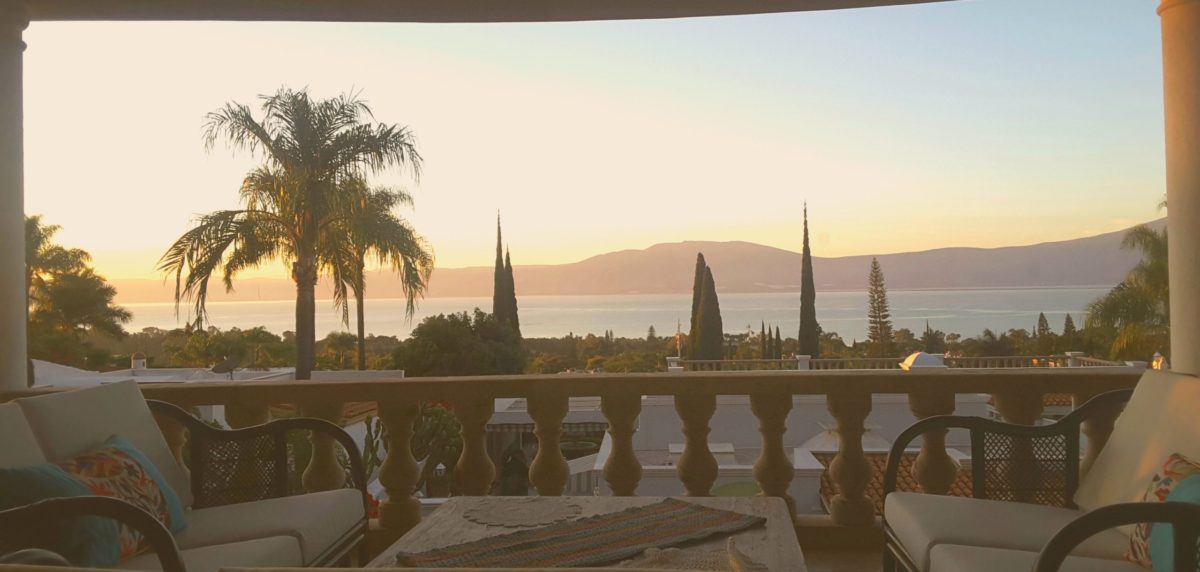
As an expat, I write frequently about how much we enjoy this lifestyle: living in a different culture (a less expensive and less acquisitive one), still full of new things to learn, new people to meet, new places to see. We know it’s not for everyone, and that’s fine. If we didn’t love it, we wouldn’t still be so happy after eight-and-a-half years as expats!
This is not one of those times. We recently had a few, shall we say, challenging experiences I wish to relate. I wouldn’t go so far as to say I’m going to complain, but rather, shed light on something common to expats that may go missing in the glossy pages of International Living or the TikTok feeds sent to you about the glories of expatdom.
Late last year, for absolutely no valid reason at all, my state of Jalisco announced it was invalidating all old licence plates and replacing them with new ones. Actually, they did state the new ones had a QR code embedded in them, but some of us already had such codes on our old plates. The good news was the turn-in and replacement would happen over the course of the entire year, in an orderly fashion (right!) based on the last digit of your current plates. The better news (from the government’s perspective) was you could pay in advance online for your new plates, your required annual registration, and your emissions inspection, all bundled together at a discounted total price. It was good news for the government because virtually no one went and got emission inspections, so now the government at least got you to pay extra, whether you ever went and got your emissions inspection or not. I give them credit: that part was clever.
The bad news for the rest of us was the “orderly fashion” turned out not to be so. People due to change plates early in the year reported long delays, because the new plates weren’t ready to be issued yet. The website we were supposed to use didn’t work at first, then it only worked with FireFox browser (who knew FireFox was still around?) Or you could go to the clothing shop next door to the recaudadora (DMV) office–and no, I am NOT making this up–and the woman there could use her desktop to make your appointment for a small fee.
Others reported a quintessential problem of Mexican bureaucracy: the petty bureaucrat at the recaudadora. The government specified what you needed to bring in: proof of residence, proof of identification, proof you paid online, and your original factura (the original sales receipt for your car, which passes for a title down here). That last document is a real challenge: there are many types, based on whether you bought new or used, and you’re never supposed to have it in your car, as the paper itself proves ownership: if someone steals your car with the factura in it, they can claim it’s theirs!
Those necessary documents are pretty straightforward: here’s where the pettiness comes in. Original and one copy, or just original? Copy on both sides, or one per page? How many forms of identification? Copies in black and white or color (the latter being considered a sign in Mexico of potential forgery, so . . .)? I guarantee you, whatever set of copies you have, they’re incorrect.
I let the matter rest for most of the year, until I saw about one-quarter of the cars on the road with new plates. Then I saw some online posts that the system was more regular now, so I figured it was time to bite the bullet. I downloaded a Chrome Extension to run FireFox, accessed the website, made an appointment, and made all the appropriate copies (or so I thought).
But wait, ¡hay mas! as they say down here. We arrived for our appointment to find that citas (reservations) are just a thing, not real. You get in line like everybody else. I noticed while we waited that about two-thirds of the people trying to get new plates were turned away: not a good average. At least it wasn’t a gringo thing: the pinche burócrata was treating the poor Mexicans in line just as badly as he would soon treat us. We dutifully arrived at the front, where the official told us we needed copies of our Permanente cards, not passports, and a different form showing we had already paid. Strike One. He sent us to the helpful office around the corner where another enterprising pair of women had set up a copier and printer to help us. We made new copies and printed another receipt. “Nope, copies too dark, and this still isn’t the correct receipt” he told us. Strike Two. We didn’t have any more options for receipts, so we retreated to eat a delicious lunch of sesame-crusted tuna, then home to lick our wounds and scour our receipts for the right one.
In the official’s defense, we did have the wrong receipts. In Mexico, when you pay an official fee online, you often get three or more documents verifying your payment, but some of them are just links to a different government website where you have to print out yet another form. You have to have just the right form, although ALL the forms show you paid the correct amount, and in fact you couldn’t even get this far in the system (if one wants to call it that) without having already paid the right amount. *Sigh* In our defense, we pointed out we used the helpful ladies the official pointed us to, so how come their copier wasn’t sufficient? He shrugged, called his boss over, who also shrugged. We left the line. Maybe next time. This was all just a reminder that humility and acceptance are graces in high demand for expats.

All this happened amidst a power outage in our neighborhood. Seems Monday night, something went “BOOM” and we lost power around 1:00 am. By the time we woke up the next morning, defrosting was already happening. But such outages are not uncommon here, usually lasting a few hours, so we ate a larger than normal breakfast of things not likely to last and tried to resume normalcy, awaiting the return of la luz (literally light, more generally electricity). Except our community has a well, and a pump, and that requires luz, so we had no water in addition to no power. As I said, we’ve been through this before: we have a garrofón, a giant plastic jug full of 20+ liters of fresh water lying in wait, just in case. We have smaller reusable water jugs in every bathroom, for extra water to flush in the same circumstances. We have a gas stove top, so when the power is gone, we can take out the matches and still cook, old-school. We have fancy French presses, a high-tech/lithium-ion/one-shot espresso maker, and a small mocha pot from Italy, so coffee is always available, as long as mankind doesn’t forget how to make fire (or push the button on the portable espresso device).
So the first morning wasn’t so bad. Except it was only the first morning. Seems the power company, a federal utility that goes by the initials CFE (and no, there is no truth to the rumor it stands for Can’t Find Electricity) saw a blown transformer and repaired it, but they never checked to see if that fixed all the homes that had lost power. It didn’t, and our community were the lucky hold-outs. When recontacted the second morning, they snapped to, and we had power restored (with water) in just thirty-six hours. If you’re counting, that’s well past the “throw-everything in your fridge out” limit, but just inside the “throw everything in your freezer out as well” limit. Phew.
Why am I regaling you with this? Mexicans adjust to the frequent absence of water and power. They primarily rely on garrofónes, since they don’t have wells and municipal water systems are not always potable, which means not at all. The basic level of electrical use, meaning a small refrigerator, a small television, some lights, is practically free. And if it goes out, you can always call up a relative and go visit to recharge. Or do without (gasp!). That fridge usually contains only a few items, as mamá goes out to the local tienda or mercado a few times a week to get fresh foods or perishables, and liter bottles of Coke never go bad (or is that never get worse?). And there’s no giant (capable-of-hiding-a-corpse size) freezer full of things Costco convinced you to buy, either. Storms come (in the rainy season), the power goes, life goes on.
But for expats, power and water loss are a bigger deal. Luz is what brings in North of the Border (NOB) television and the internet via Starlink and TelMex connections. Expats have things like Alexa devices, air purifiers, air conditioning, music systems, treadmills, power garage doors, a host of kitchen gadgets, and an untold number of personal apparatus from cell phones to computers to tablets to ear buds to hearing aids to CPAP machines. No power is no bueno. As much as we try to adapt to local culture, most expats are NOT trying to become Mexicans, nor do they seek to mirror how the locals live. If we did, we’d be immigrants, not expats.
In the thirty years we lived in and around Washington DC, we only had two major power outages. One was Hurricane Isabel (2003), which felled so many trees we in suburbia were without power for three days. The other was two days without power when the transformer for our apartment building in Shirlington blew up. A minor outage of more than a few hours meant untold pain for the local power company, and they fixed things up quickly. In our eight-plus years lakeside, we’ve had three or four major outages, and many, many minor ones. Enough to convince me that reliable power back-up is a necessity here for expats, not a convenience. We’re scoping out some home power stations, in effect large rechargeable batteries which can pull us through the outages we have experienced with a full fridge/freezer, internet, and maybe even TV. They are not cheap, but they are dependable, and that’s the cost of peace of mind. At the rate I am replacing fridge food, it’s a bargain.
If you’re especially observant (and my friends are), you’ll note the common theme in this post: relying on big, government-run utilities or services generally doesn’t work well. If Dante were alive today, the Mexican recaudadora would certainly merit its own ring in the Purgatorio, if not the Inferno. And CFE doesn’t respond to customers because, well, it doesn’t have to. Somewhere in the United States today, there is some slick, young huckster telling people that what we need is government-run grocery stores and child care centers.
Yup, it’s going to work this time. What could go wrong? And that still isn’t the correct receipt!
Excellent read. Thanks.
If you are handy, you can build a server rack battery backup with an inverter for significantly less than a plug and play system. Look up Will Prouse online. He’s one of the best at describing, reviewing and explaining how to build off grid systems.
Stay well.
That’s a brilliant idea, and I never even considered it! Unfortunately, my dear wife Judy still hasn’t stopped laughing when I read her the intro words, “if you are handy . . .” Seems my repair/construction skills are limited to a hammer, a screwdriver, duct tape, and kola loka (super glue in Español)! Even if I watched the videos and followed them religiously, I doubt she would ever let a Pat-made device in the house. 🙂