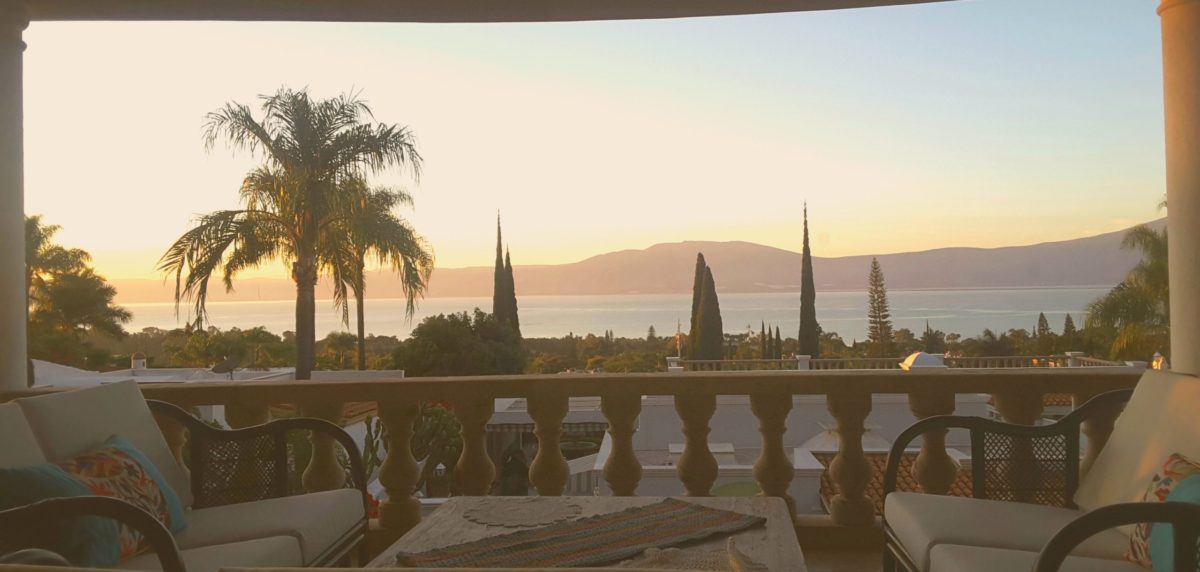
When I was visiting NOB, one old friend asked for more pictures in my blog, so here is a down payment on that request. My dear wife just got a handy new camera, so you’ll soon see real quality photography. These are just the everyday views I have out walking the dog.
These ornamental grasses were “topped” just before we left; six weeks later, spectacular againMy dog insisted on being included; he enjoys hunting lizards in the hedge wallMountains right above my developmentMountains on the other side of the lake, which you can almost see just above the treeline, in the distance
Most everyone who visits Guadalajara finds their way to two famous shopping locales called Tlaquepaque and Tonalá. Both were once small towns near Guadalajara, but as Mexico’s second largest city sprawled out, it subsumed them. Each retains some of its original character, but seem now to be just neighborhoods in Metro Guadalajara.
Tonalá (“Tone-ah-LAH”) was traditionally an authentic artisan location, full of small shops and factories making unique arts and crafts. Tlaquepaque (“Tah-lock-ee-pock-ee”) was similar, but slightly more upscale, with more recognized artists, restaurants, and retail stores. Over the years, many of the artisan shops in Tonalá have moved, some to Tlaquepaque and some elsewhere in the region; they have been replaced by a potpourri of small shops selling a mixture of just about anything.
Stalls in Tonalá
Tonalá has no organization: you’ll find a ceramics store next to a religious figurines place across from a glassware shop, and then the same odd mixture on the next cross street. The streets remain open to traffic, so one need be cautious in window
More stalls
shopping. Some streets and the area near the plaza have stalls selling their wares, creating a tianguis or market atmosphere. Tlaquepaque has a pedestrian zone lined with upscale restaurants, galleries, and numerous boutiques for high-end jewelry, couture, or objet d’art. If you wander off the more touristy path, there are still remnants of the original artisan workshops.
Pedestrian area in Tlaquepaque
Our good friend Lorraine showed us around on visits to both “towns” as we sought some authentic Mexican dinnerware. One thing she mentioned time and again was how much each place has changed: both are more commercial, more touristy, and less authentic than in the past. We eventually found a real ceramic factory (Ceramica el Palomar) off the beaten path in Tlaquepaque. The owners literally “turned on the lights” in their showroom for us; they weren’t expecting any walk-in traffic. After we exchanged pleasantries and explained what we were looking for, they offered to take us on a tour of the factory behind the showroom. We found a nice set of dishes, each individually signed on the back (with a symbol) by the artist who made them.
Factory tour pics…
Our pattern: you can see the artists “fish” symbol on the mug
If the name Tlaquepaque seems oddly familiar, it might be because you have visited Sedona, Arizona. On a trip there last year, we found an upscale arts-n-crafts mall called by the same name. Life imitating art imitating life, as it were.
If I had to choose between Tonalá and Tlaquepaque, I would spend the time and money in Tlaquepaque. If you want to have a real Mexican market experience, you should go to the Mercado Libertad, but that is the subject of another post, another day!
it’s not a trip without a restaurant visit: Judy & Lorraine
I continue to experiment with this medium. I trust the photos I include are getting better, or at least they are all now “right side up!” Now I am tackling video. I apologize up front for the resolution: while I could take the video in HD, getting it uploaded to the cloud and then onto this site was impossible. I filmed it in HD and then retrofit it to a lower resolution to make it fit, but I think it is still pretty viewable.
For those considering visiting, consider this a preview. For those who aren’t, see what you’re missing!
We took a guided tour around our lake with Charter Club Tours, starting from Ajijic and going clockwise. I’ll let the pictures do the talking:
Chapala’s historic train station, which means no mas trainsMezcala island, site of battle in 1812One lane road into San Pedro Itzican…High above the town
Many Mexican towns have an ancient name (Itzican) with a Christian name attached (San Pedro).
We don’t need no stinkin’ guardrail!The eagle/snake/cactus melange, symbol of Mexico, andStained glass ceiling in Ocotlan city building
Painting of the earthquake of 1846, andthe miraculous sighting of the Christ crucified on the next day, which
led Ocotlan to build a new church. Note the the hedge spelling PRODIGO or miracleJamay likes Pope Pius IX, so they put this monument to him in their square
Most Mexican towns have a square that remains the center of town life. The squares were clean and full of people going about their business.
Why did the goats cross the road?To get to the birrieria, of course (don’t ask)
Lunch with our guide/driver, Hernan, and Chris and Fran, tour friends. Judy had birria for lunchMurals of the tianguis in La Morena house,in La Barca. The bladders are full of Pulque, a fermented drink similar to Mezcal or Tequila
Lakefront in Petatan: thousands of Pelicans overwinter here, but now those snowbirds have flownView of home, from across the lake. Our place is just below the small hill with a barren spot, lower right quadrant. Note how close the mountains are to the lake.Jocotepec lakefront, andview of the town
As I have been talking so much about Mexico, I thought I would take the opportunity discuss the difference between Tourist Mexico and Real Mexico. When most Americans think of Mexico, what they picture is Tourist Mexico. Tourist Mexico comprises the many locations such as Cancun, Cozumel, Los Cabos, Puerto Vallerta and others which were developed specifically to entice cold weather visitors from North America and Europe. My family has visited Tourist Mexico many times, as have many Americans. But Tourist Mexico is not Real Mexico. Tourist Mexico is to Real Mexico as Disney World is to the United States. Disney World is a fun place to visit, but if a foreign visitor thought it was America, they would be shocked when they got to Detroit, or Austin, or Peoria.
The place where Judy and I live is not Tourist Mexico. If you lived in those locations (say, Playa del Carmen) your life might be more like tourist Mexico then real Mexico. Let’s see what the differences are:
Cuisine
Mexican cuisine is quite varied, with each region having specialties. Mexican cuisine and French cuisine are the only two cuisines recognized by UNESCO as unique cultural heritages for the entire world. However, when you are in Tourist Mexico, you will most likely find a version of Tex-Mex, the food that passes generically for Mexican food north of the border. It is more Texas than Tejas: heavy on spicy sauces, lots of beef, thick cheese. Burritos on the menu are a dead giveaway. The emphasis is on quantity. Real Mexican cuisine tends more toward beans, queso fresco, fresh vegetables, and homemade tortillas. If there is meat, its often chicken or pork, or whole fish. The emphasis is on quality and freshness. Tourist Mexico may serve up fresh ingredients, too, and if you look beyond the tourist menu, you can find authentic dishes.
Climate
Tourist Mexico has some of the best beach weather on the planet. Its real, its tropical, and its magnificent. Warm sun, soft sand: exactly what so many tourists come to experience. Yet Real Mexico has an incredibly varied climate. The Sierra Madre ranges runs the length of the country, providing wonderful vistas and active volcanos! There are extensive deserts, tropical rain forests, a Mediterranean coastal climate, and high temperate plateaus (like the one I live on). If you want the big city, Guadalajara checks in at over 4 million, and Mexico City at a whopping 21 million (biggest in the western hemisphere).
People
Here is where you will see the least change between Tourist Mexico and Real Mexico. What every visitor notices is just how friendly the Mexican people are. Now you would think the Mexican people working in tourist resorts are paid to be friendly, but the amazing thing is they would be that friendly anyway! Real Mexico is a lot like small town America 50 years ago: people greet each other on the street, and if someone needs help, someone else will offer it. Nearly all expats living in Real Mexico have a story of how some Mexican went way out of their way to be helpful.
Money
Depending on where you’re from, you might find Tourist Mexico to be much less expensive than home; even if you come from a less expensive place in the States, you’ll probably notice some deals just because of the dollar-peso exchange rate. Here’s the good news: Real Mexico is way less expensive than Tourist Mexico. In those areas where Tourists frequent, you will be able to use credit cards or dollars for your purchases, but you’ll get a poor exchange rate (consider it a convenience fee). In Real Mexico, many stores and restaurants do not accept credit cards, and cash business is in Pesos only. But the prices are often ridiculously low, especially for the labor involved in any product.
Culture
One last, big, area of difference. Tourist Mexico has evolved to handle Gringo culture. Things are done faster, portions are larger, deals are Gigante! Real Mexico is very different: things are slower, and manana culture (“tomorrow, if ever”) prevails. Portions are normal, and while bartering is a possibility, you don’t take advantage of the seller, because they too are making a living.
In Real Mexico:
A religious parade might break out at any time…horses merge with horsepower (she just put away her smartphone, btw)
And in Tourist Mexico:
Are those golden arches? Look closely and you might see some Spanish!Always more FOR SALE, but beware the HECHO EN CHINA label
I am not criticizing Tourist Mexico, just suggesting that if you only know Tourist Mexico, you should give Real Mexico a try. And yes, those are my pale feet on the beach in Tourist Mexico: