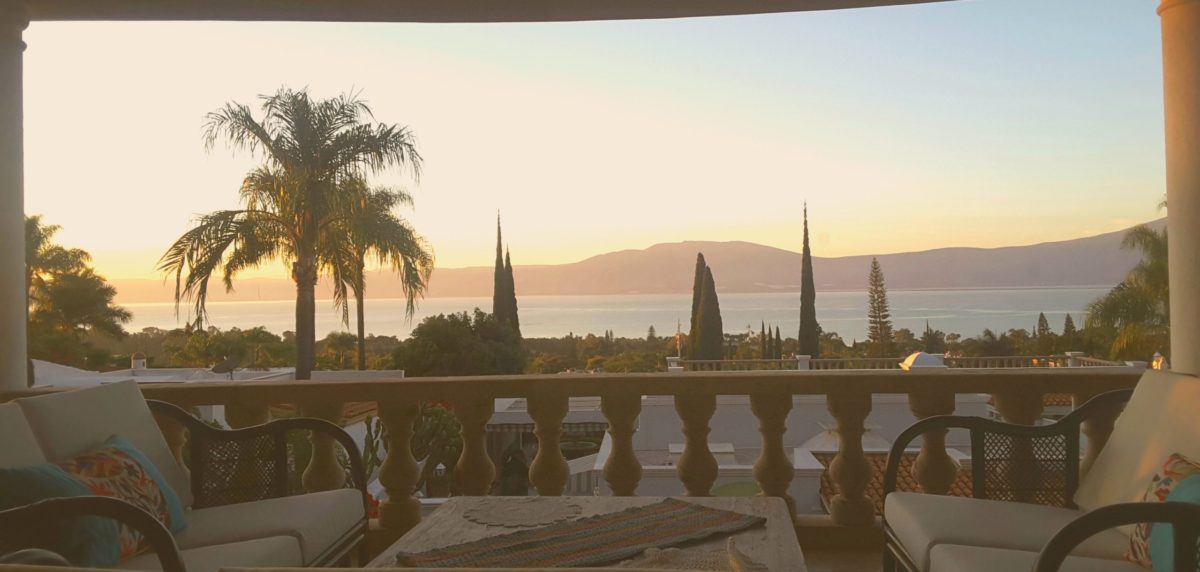
If you are going to live the expat life, you’ll be away from family and friends for months at a time. This is one of the negative aspects, but it also means you’ll on occasion travel back to visit. We are on one of those visits right now, after six months setting up our casa in Mexico. Is there anything better than seeing old friends, or getting together with your family, especially your grandkids?
The BrewDogs strike a pose
We recently spent a long weekend renewing friendships at a small reunion with my old “college classmates”. I use that term only the your familiarity, because I did not go to college, I went to West Point, which has a passing similarity to college, in the same way that a Sunday drive in the country is similar to the Indy 500. I like to say we did not matriculate, we were institutionalized. Anyway, the Long Gray Line has a way of instilling lifelong friendships, so it was great to get together and share stories, learn of life’s twists and turns, and just talk. Because of our shared experiences, we all feel very comfortable around each other and easily fall back into an openness which belies the years apart.
Tunnels & Hills aplenty
As enjoyable as old, lifelong friends can be, nothing bests family, especially grandkids. Lately I have spent mornings constructing an awesome rollercoaster, taking a canoe trip down the Little Miami river, and having an epic water gun fight, all with my oldest grandson, Ian.
It is a simple joy, but simple pleasures are most often the best. It is hard to pack missed months together into a week or two, but we plan to take advantage of our newfound leisure time to visit more frequently. We are blessed in that Ian’s other set of grandparents live nearby, so even if we miss him, he does not lack for grandparental attention!
Next up, a mini-family reunion and a visit to “the Shrine.”
Most everyone who visits Guadalajara finds their way to two famous shopping locales called Tlaquepaque and Tonalá. Both were once small towns near Guadalajara, but as Mexico’s second largest city sprawled out, it subsumed them. Each retains some of its original character, but seem now to be just neighborhoods in Metro Guadalajara.
Tonalá (“Tone-ah-LAH”) was traditionally an authentic artisan location, full of small shops and factories making unique arts and crafts. Tlaquepaque (“Tah-lock-ee-pock-ee”) was similar, but slightly more upscale, with more recognized artists, restaurants, and retail stores. Over the years, many of the artisan shops in Tonalá have moved, some to Tlaquepaque and some elsewhere in the region; they have been replaced by a potpourri of small shops selling a mixture of just about anything.
Stalls in Tonalá
Tonalá has no organization: you’ll find a ceramics store next to a religious figurines place across from a glassware shop, and then the same odd mixture on the next cross street. The streets remain open to traffic, so one need be cautious in window
More stalls
shopping. Some streets and the area near the plaza have stalls selling their wares, creating a tianguis or market atmosphere. Tlaquepaque has a pedestrian zone lined with upscale restaurants, galleries, and numerous boutiques for high-end jewelry, couture, or objet d’art. If you wander off the more touristy path, there are still remnants of the original artisan workshops.
Pedestrian area in Tlaquepaque
Our good friend Lorraine showed us around on visits to both “towns” as we sought some authentic Mexican dinnerware. One thing she mentioned time and again was how much each place has changed: both are more commercial, more touristy, and less authentic than in the past. We eventually found a real ceramic factory (Ceramica el Palomar) off the beaten path in Tlaquepaque. The owners literally “turned on the lights” in their showroom for us; they weren’t expecting any walk-in traffic. After we exchanged pleasantries and explained what we were looking for, they offered to take us on a tour of the factory behind the showroom. We found a nice set of dishes, each individually signed on the back (with a symbol) by the artist who made them.
Factory tour pics…
Our pattern: you can see the artists “fish” symbol on the mug
If the name Tlaquepaque seems oddly familiar, it might be because you have visited Sedona, Arizona. On a trip there last year, we found an upscale arts-n-crafts mall called by the same name. Life imitating art imitating life, as it were.
If I had to choose between Tonalá and Tlaquepaque, I would spend the time and money in Tlaquepaque. If you want to have a real Mexican market experience, you should go to the Mercado Libertad, but that is the subject of another post, another day!
it’s not a trip without a restaurant visit: Judy & Lorraine
So if you are an expat, occasionally you will have the opportunity to “return home” to the US of A. For us, that involved a drive from Ajijic to the border, which we just accomplished. While “all’s well that ends well” is certainly the case, the trip was not uneventful.
The drive from Ajijic to the border at Laredo is about 11 hours, so you might end up driving at night (or at least dusk) in Mexico if you try to do it all in one day. Nighttime driving is a big no-no south of the border, just because livestock graze along the highways, and nothing says “stop” like coming across a cow looking for better grass in the middle of the cuota (toll road)!
So we drove to Monterrey and staged there for the next day’s assault on the wall, err, I mean the border. Tip for Lakesiders: the City Express Hotel Norte next to the airport in Monterrey is a great choice: under $50 US, clean, next to the main road north to Laredo, with a few adjacent restaurants. Our first day’s drive was uneventful, with the exception of a severe rainstorm we eventually outran.
Our second day went differently. We made it to Laredo by 10:00, but there was a 90 minute back up at the border. Even our Waze app (highly recommended) abandoned us, as it tried to take us across a closed bridge. Judy was driving the first vehicle in our convoy, and of course she got the border patrol officer who wanted to do a full car search, uncovering her “stash” of contraband, which you and I would call bottles of Limoncello made by Benedictine nuns. Fortunately, she just had to pay import duty, and we went on our way.
We made it to US highway 59 outside Laredo. If you like driving, you owe yourself a trip to Texas just to drive on this take-off/landing strip which pretends to be a highway. Several hundred miles of two-lane pavement (with ample shoulders) with regular passing lanes. Flat and straight as an arrow. 75 miles-per-hour, and the only people in uniform you will see are US Border Patrol. Oh, and this part of Texas has plenty of nowhere, as in you might not see anything beside the road beside scrub brush.
Things were going well but running late as we approached Houston. Texas had not properly welcomed us yet, so it chose this time to do so. We saw some ominous clouds, and then as we were just an hour outside Houston, we met a literal wall of water: a true Texas-style storm. It was like driving through a waterfall, or driving inside a carwash. This caused the native Texans to slow to almost 60 mph, and yours truly played along. I always say seeing is overrated when it comes to driving!
Judy kept up in the chase car, although all she could see at times was my emergency blinkers disappearing in the mist. We eventually made it to the CarMax in Houston. They processed my Toyota FJ in about ninety minutes. Car-selling tip: check out CarMax even if you are not trading in, but take along an “instant offer” which you can get online from Kelly’s Blue Book. This ensures you get a fair price. Since my car is sought after, they made me an offer AND did their own double check on Kelly’s, then said they would match the Kelly’s price, which was greater than their offer or my original Kelly’s estimate.
Adios, Amigo!
An hour of Houston rush hour traffic later, we made it to our hotel in Baytown (east of Houston on I-10). We were one car lighter, had some US change in our pocket, and were safely across the border. Now I just have to stop saying “Buenos Dias” to everyone.
We really looked forward to getting more involved with hands-on charity work in retirement, and now that we are there, one of the charities we most enjoy working with is Villa Infantil. The Villa is a local orphanage run by some Mexican nuns. They have a nice compound on the south side of the lake, about one-half hour from our house. There are about 35 children at the home. Every one of them has a heart-breaking story, but in most cases it has the happy ending of them being at the Villa. Our parish helps by (among other things) collecting supplies and groceries once a month, running an annual fundraiser, and holding a party for those children who have a birthday each month.
Someone always wants the bowSeconds on cake?
We attended the birthday bash this month. The event began with Mass in the chapel, where we got to enjoy the children singing and high-fiving Father Basil as he processed to the altar. At the end of the Mass, the children orderly exited one row at a time under the watchful eyes of one of one of the Sisters. One of the youngsters, Santiago, gave us a guided tour of the premises. The younger children were thrilled with some large marbles thoughtfully provided by a volunteer; some of the older kids played games like t-ball or catch with an American football. Once the lunch was ready, the kids took their seats and we served them hamburguesas with potato chips. We all sang Happy Birthday and ate cake, then each child with a birthday that month got a set of presents again provided by volunteers.
She is still liking that bow…and “what is that?”
You’ll never see kids happier with a toy, a game, or a ball and a chance to play catch. Whatever joy those children felt, I bet all the volunteers would agree with me that we had “the better part.”
One challenge every expat faces is “what to do about the local language?” Do you just ignore it, speak English very loudly, and hope for the best? Do you learn a few phrases, so you can ask for another beer, or where the restrooms are, and just get by? Do you rely on Google translate and hope we get the Universal Translator before you croak? Do you just keep trying through experience and osmosis to pick up the language? Do you go online and try the free or pay language training sites? Do you take language classes in person?
We always assumed we would learn Spanish, just to be comfortable in our new home. We both have foreign languages in our past: I spoke German and some French; Judy also spoke German and had four years of high school Spanish. We thought we would find some immersion training in Guadalajara, since it has a major university and is known for immersive language training. However, most of the immersion training is aimed at college students, and we weren’t interested in moving into a dorm for six weeks (imagine that!).
We found many great language aids online. YouTube is full of decent instructional videos. We weren’t partial to Rosetta Stone, but we did like Synergy Spanish and look forward to following Destinos when we learn a little more vocabulary. We really like free apps like Memrise or sites like Spanishdict.com, which can really help with practice or training aids. Judy has done a great job putting new vocabulary words on flashcards on Quizlet.
In the end, we needed more structure: we learned many phrases and short questions/answers, but we weren’t learning the language. So we decided to try a local language school, Olé México. We meet three times a week, for 1 hour and 45 minutes each class. Our class is just four students and one teacher, so we get ample opportunity to practice speaking.
Class, L-R: Judy, Nadia, Darcy, Penny
We started with the alphabet and pronunciation drills, and then began conjugating regular verbs. We keep adding vocabulary by learning sets of words, like directions, or adjective pairs (strong/weak, short/tall), or noun groups (Mom, Dad, Son, Daughter, Family). We just tackled the ever-difficult “when to use Ser versus Estar” lesson. For those who don’t know, Spanish has two different versions of the English verb “to be”, and they are used for different qualities of “being.” Ser is for essential characteristics, and estar is for more transitory characteristics, mas o menos.
I always heard from language teachers that Spanish was the easiest foreign language for English-speakers to learn, because many words translate almost directly (like anything ending in -ion), and in Spanish the vowels and consonants have only one sound and you sound them all out.
Our teacher, Nadia, has done a great job. We enjoy lessons where she asks us to describe our favorite actor or singer, and the class has to guess who it is. We just finished describing our extended families. Or sometimes she asks us a basic question like “where were you born?” and then asks us to describe the differences between that place and where we live now. It is a lot of oral practice, but we can already see a difference in our language capabilities. We can hold basic conversations with merchants, exchange pleasantries with people we meet, and at least make ourselves understood, even if we don’t always know the correct terms.
Perhaps I will try out a dual language post in the not too distant future!
I thought about titling this post “leaks and dirty leakers who leak them” (apologies to Al Franken) but then I realized some might mistake the topic for something which goes on far too often in Washington, DC, and that’s not the case at all. No, today I am covering the neverending story which often accompanies life in the tropics: leaks during the rainy season.
Most people know that a tropical deluge can represent several inches of rain in a single day, followed by more of the same the next day in the rainy season. We’ve had several nights of rain in a row recently. We have a mostly flat roof, with a gently sloping surface that feeds run-off spouts which let the water fall directly next to the house; since we have no basement, there is no need to worry about flooding a lower level. The roof is treated with a water-proofing cover that resembles asphalt paper, and the more decorative sections (like the cupolas) have a painted stucco exterior over a waterproof fiberglass material covering the brickwork.
Over the course of time, that constant flow of water wears down the waterproofing, and cracks form, letting water into the house. This is not the major crisis it would be north of the border. The interior is brick and stucco, the floors tile; there is no wood, baseboard, or wallboard to absorb moisture, be ruined, and require replacing. So the key is to sop up the rain and get the crack sealed; too many leaks in the row are nature’s way of telling you to reseal the whole roof.
So I am sitting at the table, surfing the web one morning, and I hear the pleasant hum of rain outside. But in among the rain-sounds is an occasional “thump.” It sounds closer, and not at all natural. Unless you consider the sound of water dripping from your ceiling onto a custom-made Spanish leather storage chest “natural.” Yes, we had a small leak above the windows in our cupola, which was dripping on the furniture. It was in such an out of the way place, we even developed some mildew,
Arghhhh! Get the bleach!
since we did not discover the leak until several rainy days in a row generated enough moisture for it to leak down into the ceiling and fall. We called Jorgé the repair guy, who dutifully patched the cracks and resealed the cracked areas of the cupola.
New sealant around the cupola…and on the corners of the boveda ceiling
Several more days of rain revealed more cracks, and more repairs. Now we have been two rainy days without leaks, so perhaps we are done. We’ll re-evaluate whether to replace the entire sealant on the roof when the rainy season ends.
Looks like the neighbors are repairing, too
If you have ever had a serious roof leak, or worse yet water in your basement, you know what a drill it can be. Leaks are a fact of life here, but more of an inconvenience than a major deal.
I continue to experiment with this medium. I trust the photos I include are getting better, or at least they are all now “right side up!” Now I am tackling video. I apologize up front for the resolution: while I could take the video in HD, getting it uploaded to the cloud and then onto this site was impossible. I filmed it in HD and then retrofit it to a lower resolution to make it fit, but I think it is still pretty viewable.
For those considering visiting, consider this a preview. For those who aren’t, see what you’re missing!
When my dear wife and I travel, we often play a game where we look at some small, out of the way hamlet and ask “where do they get their groceries?” Sometimes the answer is just around a corner, where we pass a general store, but often there is no obvious answer.
SuperLake: Gringo favorite
Here in Mexpat land, there are several obvious answers. First off, we have mega-chains like Costco and Sam’s in Guadalajara. We also have traditional supermarkets, including a Walmart here in Ajijic and a Soriana next door in Chapala, and another called Mega near Guadalajara. All of this retail infrastructure would be very familiar to any visitor from NOB. While prices at these retailers are good, they are not the budget-friendly option in Mexico. Places like SuperLake stock the usual local foodstuffs but also exotic imports–at a mark-up–for the expat crowd.
Mr. Bull sells beef, natch
Next there are the small specialty stores: the butchers, the bakers, the tortilla-makers. These are generally small shops run by families and marketing a very specific product. Again, not unlike the American market 50 years ago, but here the small retailers were never run out of business like they were so often in the States. Today in the States, these small shops are usually high-end or boutique retailers, while in Mexico they are budget-friendly providers.
The Coffee Guy, Francisco…and the elusive Dairy Guy
One variation on the specialty shop is also one of the more unique retail operations in Mexico: the “guy-with-the-truck.” We can track the Dairy Guy, have heard rumors about the Beef Guy and the Fish Guy, and we absolutely rely on the Coffee Guy. These entrepreneurs load up their specialty wares and stop at specific locations on specific days, where you can walk up to their trucks and purchase your food. Somewhat like the food truck movement NOB, but for the raw ingredients, not finished meals.
Up casa, down tienda
Another retail form are abarrotes, literally grocers. These are mini-general stores, usually run out of the first floor of the home or even a room in the family’s casa, and they stock the usual suspects: things in constant demand by locals at very low prices. They are ubiquitous.
Finally, the most important retail operation in any village or town is the tianguis, or market. Usually set for a given day and deconflicted with neighboring towns (so if you miss your tianguis, you can take the bus down the road and visit the next village’s tomorrow), tianguis are a melange of fresh fruits and vegetables, snacks, toys, electronica, carry-out meals, pets, you name it. The tianguis is as much a social event as a shopping trip.
Tianguis street, normal day…Tianguis street, market day
The tianguis is a cross between a farmer’s market and a county fair. It sprouts up once a week, transforming the street in the process. Wonder how the stalls get the power to run their cooking or entertainment devices? If you enlarge my photos, you’ll see an multiplug stuck into an extension cord leading up the stone wall. Somebody climbs a pole and hacks into the overhead electrical wiring!
Need a freshly made breakfast?How about a jug-o-drink?How about some just finished art with your fresh coconut water?
We took a guided tour around our lake with Charter Club Tours, starting from Ajijic and going clockwise. I’ll let the pictures do the talking:
Chapala’s historic train station, which means no mas trainsMezcala island, site of battle in 1812One lane road into San Pedro Itzican…High above the town
Many Mexican towns have an ancient name (Itzican) with a Christian name attached (San Pedro).
We don’t need no stinkin’ guardrail!The eagle/snake/cactus melange, symbol of Mexico, andStained glass ceiling in Ocotlan city building
Painting of the earthquake of 1846, andthe miraculous sighting of the Christ crucified on the next day, which
led Ocotlan to build a new church. Note the the hedge spelling PRODIGO or miracleJamay likes Pope Pius IX, so they put this monument to him in their square
Most Mexican towns have a square that remains the center of town life. The squares were clean and full of people going about their business.
Why did the goats cross the road?To get to the birrieria, of course (don’t ask)
Lunch with our guide/driver, Hernan, and Chris and Fran, tour friends. Judy had birria for lunchMurals of the tianguis in La Morena house,in La Barca. The bladders are full of Pulque, a fermented drink similar to Mezcal or Tequila
Lakefront in Petatan: thousands of Pelicans overwinter here, but now those snowbirds have flownView of home, from across the lake. Our place is just below the small hill with a barren spot, lower right quadrant. Note how close the mountains are to the lake.Jocotepec lakefront, andview of the town
Here in the mile-high-desert-plain-beside-the-lake, we have a dry season (November-May) and a rainy season (June-October). While we are in the tropics, we don’t have a proper monsoon, just regular weather patterns with fronts that bring consistent rains. Many rain storms happen in the early evening, as the storms blow north across the lake and attempt to scale the mountains which hug the north shore communities. For you weather geeks, it is called orographic precipitation, and it happens often enough here to be local legend.
So for expats around Lake Chapala, May and the dry weeks in June are the most uncomfortable. It is desert-dry, and the sun can easily cook up 90 degrees. Many year-round expats plan their “vacations” or visits back NOB during this time. We had visited lakeside during this period, but coming from DC and only being here for a week or two, the dry heat seemed a relief in comparison. This time, we were here for the whole hot, dry mess. As Don Henley put it, “stuck here in limbo, tryin’ to say sane, ‘tween the end of the summer, and the coming of the blessed rain.”
On a clear day…mountains everywhere
We have neither air conditioning nor heating; they just don’t build many houses here with either. We arrived in February and brought along a bed-size heating pad, but we never used it: not cold enough. The hot/dry time got to us, mainly because it was so relentless. You could not escape the sun/heat during the day, although it did cool down at night. We eventually succumbed and bought a swamp cooler, a fascinating device which looks like a portable air conditioner but is just a water tank, a pump, and a fan. The pump pushes the water from the tank in front of the fan, where it evaporates, cooling the air which blows out of the unit. The air is not cold, just cooler. The unit is effectively a “humidifier” since it works exactly opposite those de-humidifiers some of you may have NOB. Swamp coolers have long been used in very dry areas; where the humidity is already high, they do not work.
Over the course of the dry season, the mountains get progressively browner, dust builds up, and it gets hotter… “yeah, but it’s a dry heat.” The lake level begins to fall as more of it evaporates in the very dry conditions. Sometime in May, you start to hear the shrill cry of the rainbirds, which are not birds, and have nothing to do with the rain. Rainbirds are incredibly loud insects (cicadas, I believe) which emerge at the end of the dry season and set out making a racket. They are loudest initially up on the mountains, but by the beginning of June you can hear them singing nearly everywhere during the day.
Adding to the sun, arid heat, ebbing shoreline, and the rainbirds, May is when local farmers start burning their fields to prepare the soil before planting once the rains hit. I use the terms “farmers” and “fields” advisedly, because they cover a gamut of situations from large, industrial berry fruit operations to locals planting in their backyards to ejidos planting corn and pasturing cattle on the mountainsides.You can smell a faint hint of smoke anywhere, and sometimes see the fires burning in the mountains at night. Lucky us, this year was also a record-setter for fires in the nearby Jalisco forests.
Look closely, there is a mountain missing in the distance
Just about the time you start to think that 10 and 1/2 months of perfect weather are not good enough to make up for all this, one afternoon you spy thick, ominous clouds coming over the far side of the lake. They seem to rush across in the afternoon, and then stall at the foot of the near-side mountains, like tired runners with a final hill to climb before the finish line. As they slowly climb they get darker, and begin to rumble and crackle. The deluge begins, all is forgiven. Happy Rainy Season!