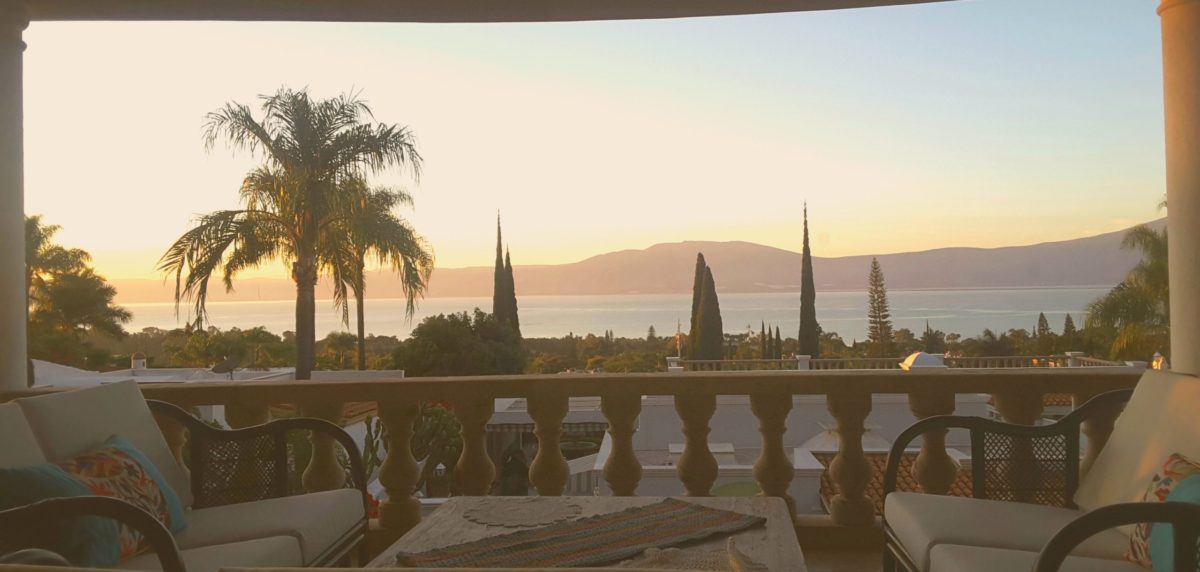
Marriage (and life in general) is a series of compromises. My dear wife would prefer to be at home, living her routine, every day, for the rest of our days. That works great for us during college football season (September-January), as I too like to be where I don’t have to search to see where games might be televised. I can access the Firestick, pull up YouTube TV, and select four games to watch simultaneously. Three times each Saturday. And some people think there is no God!
But starting in February, I get the travel itch. That’s not quite true. Starting in February I get the travel itch for next year, as by February all this year’s travel is planned, paid for, and ready to go. Judy is game for the annual exodus, but because we’re traveling, I get a chance to compromise. For example, we try to avoid those “If It’s Tuesday, This Must Be Belgium” type trips, endlessly hauling luggage up-n-down European stairwells because the Romans didn’t invent the elevator. We try to stay longer when we go somewhere. We try to avoid jet-lag. and most importantly, we try to live wherever we land within our home, expat schedule.
“What’s the point of traveling if you’re going to live like you’re at home,” you might ask. Why, that’s the point of this blog post!
Living by your typical schedule gives you a sense of normalcy in unfamiliar places. Life on the road, even a planned, extended trip, can quickly become unsettling. A rail strike in Italy, which doesn’t even get covered by the local press anymore, can mean a missed airline flight. A grabby cabbie can lunge at your fistful of dollars in Istanbul, because you don’t have enough Lira (true story). Worst of all, you might get sick. Anyone who has been sick far away from home knows the feeling: what do I do now? Visiting Oxford many years ago for an executive seminar (thanks, US taxpayers!), I got a terrible head cold. I mean snot running out my nose in a torrent. I asked the professor of my seminar where I could get some pseudoephedrine to address the symptoms. She looked at me like I was trying to score some crack. Turns out it was a controlled substance back then in the UK (now too in the US). She said Brits just go to the local apothecary, which I then did. Where, it turns out, they offered me an herbal tea and some smelly thing for a chest rub. Luckily, my wife was arriving from the States, and she smuggled in a box of extra-strength Sudafed.
But setting aside the things that go terribly or mostly wrong, just small things can add up. The coffee is not quite right, or the dining hours off, or the microwave controls appear to be from the Soyuz system. People stay up late partying next door, or don’t form a queue at the bakery, or have a trash and recycling system more complicated than voting in the States. Eventually you can figure these things out, and life sets into a slightly-different routine. But not if you don’t settle in place, first. So we try to keep our home schedule, with nice local excursions to that schedule. What’s that look like here in Alicante, Spain?
I still get up between 6-6:30 am. You can’t get up before the dawn for forty years and not establish a pattern. So that’s my quiet time, to pray, to fix some coffee, to start my daily reading. I wake Judy at 7:30, with a cup of fresh brew and a song. Always the same song. I tried to change it once and never got a verse done before she asked what I was doing. I return to my reading (and another cup) while she has her prayer and quiet time. Around 8-8:30 she makes breakfast. Here’s where small changes come in. We have a minimal kitchen here, and plentiful Spanish foods, so we generally have eggs with jamon iberico (in its many forms), toast with olive oil and salmorejo ( a cold garlicky soup the locals also pour onto the breakfast bread). Judy has the same with what I call her “nuts and twigs”: cottage cheese or yogurt with chia seeds and powdered bat-wing, eye of newt, and grass from the plaza next door. I may be wrong about the last few ingredients. Maybe. I don’t want to ask.

Between 9-9:30, at home we would head to the gym we built in our basement. Here, we joined a local gym for the two months of our stay, €30 per person per month, no sign-up fee and no long-term commitment. We go six days a week, with a schedule that includes daily stretching and cardio, and weights with rest days in between. I have to say that we see the same set of twenty-something gym-bros and -bras there everyday, so I have no idea what they all do for a living. We’ll be at the gym until 11:30-noon, then back to the apartment.

Lunch presents the first real choice of the day: do we eat out or will Judy cook it? Remember, we only eat breakfast and lunch, so cooking our big meal of the day is no small commitment. Judy usually plans a day or two out in advance, so sometimes there is a chicken breast or pork filet that needs eating, other times not. Fresh Broccoli, or seasonal vegetables: right now it’s asparagus and artichoke season, so they’re fresh, inexpensive, and in every tienda. I’ll have a few restaurant options to choose from if that’s what we lean toward this day. Not all of them will be tapas, croquetas, or even Spanish cuisine; we just hit a pizzeria because it advertised real Napolitano pizza, and sure enough, the chef was from Naples. There are sushi, Thai, Poke, Argentine, Chinese, and Arab restaurants within blocks.


After lunch, we usually go do our grocery shopping. When in Europe, shop like the Europeans: go to the store every day and get fresh bread, veggies, milk, etc. Carry them home in a little trolley. Yes, they do have giant all-in-one stores like Costco, but most people shop in the store down the street. The crazy thing is, everything in there will be fresh. When you walk into a 7-11, you expect processed and frozen food; you don’t eat the prepared stuff unless you have a death-wish. Here, even the prepared foods were made this morning, and usually by someone who really took pride in making that little ensalada rusa. And they’re good, and not expensive.
Because it’s close to the apartment and we shop for a only a few things, it’s a quick trip. We often take a short walk around town after meals. Between 1:00 and 2:00 we face a second choice: is there some place or event we want to visit? Via walking or the tram, we can get anywhere in town in under ten minutes, so we can pop over to a museum, a store, a display and be back before siesta time. Or we can always go another day, and siesta time beckons sooner. Siesta is real thing, but it doesn’t always involve sleeping in the middle of the day. Well, it does for us, but in general in Mediterranean cultures, it’s the hottest part of the afternoon, when it is best not to go out, or if you must, to run a few errands before returning to work. In Mexico the school day is a half day, so parents go home to greet their children coming home or to send the second shift off to school. Here in Spain, many more stores stay open as a convenience, but some banks and government offices close. In the Spring it seems a luxury, but in Summer, it’s a necessity.
Judy can easily put in two hours of siesta, falling asleep to her True Crime podcasts. How anybody can fall asleep to the creepy voice of the narrator saying, “he looked normal, but that machete he was sharpening had a well-worn blade” I will never understand. I take my patented Pentagon nap. Back in the day, when I was still in uniform and worked on the Joint Staff in an extremely stressful job supporting the nuclear arms talks, we all used to work insane hours. My bosses didn’t care how long we spent at the POAC: the Pentagon Officers (and civilians) Athletic Club. On really bad days, I would head down there, switch into my swim trunks, shower next to the pool, then sit down in one of the pool-side lounge chairs (yes, they really had these, although the pool was underground!) and close my eyes. Forty-five minutes later (without a smartwatch, timer, or alarm clock), I would sit up, shower and get back in uniform, and “resume the suckage” as we used to say. Thus is my siesta today.
I’ll wake Judy between 4:30 and 5:00 pm so we can indulge a guilty pleasure: watching the ABC evening news and The Five on Fox. Depending on what time zone we’re in, these shows may be live, taped, or even from the previous day (most often the case in Europe). It’s strictly to see what the legacy media is saying, and if you haven’t ever watched The Five, I recommend it to you. The panelists (mostly regulars) genuinely like each other, so the banter is spontaneous and authentic. They really do mix it up, and there are genuine representatives of different viewpoints: MAGA, trad GOP, libertarian, liberal/progressive, and comic. But there’s clearly a right-leaning take.
In the early evening, we may go for another walk. I’ll do some writing, either for this blog or for a book. We both review social media, but try to limit it by setting a time to “watch our shows” normally at 8:00 pm. At that time, we pull up some new or interesting series on Britbox, Acorn, Netflix, Amazon Prime, or other streaming services, watching however many episodes fit in before 10:00 pm and bed.
Go to sleep, rinse and repeat.
The one major difference is Sunday, where we skip the gym and instead go to church. Oh, and Monday, when we cut into siesta by getting a massage at the Thai parlor down the street.
Last week, I reported on the afternoon and late evening processions we attended, which throw this schedule off, but are of course part of the reason for travelling in the first place. This week, there’s another pilgrimage and a croquetas competition, so those will find a place on the schedule. The nice thing is we don’t have to feel rushed. It started to sprinkle today as we left church, and we hesitated: do we skip the archaeology museum for another day? We chanced it, and the threatened rain didn’t materialize. And we got that amazing pizza afterward.
We were never going to be comfortable adopting the Spanish eating schedule. As I write this, I’m watching the families out in the plaza across from our balcony apartment, and they’re sitting in the square, talking and playing games, working up an appetite for dinner, because it’s only 8:00 pm and it’s still quite light outside. They’ll be out until 10:00 pm, kids included. Works for them; would make both of us sick. But other aspects are easier to adopt. Doing small loads of laundry (we’re lucky our apartment has both a small washer and dryer), shopping daily, walking everywhere.
So any given day may seem a lot like home, with some more Spanish flavor (as in the meals) or be as different as attending a pilgrimage walk of several miles with several hundred thousand of our closest co-religionists (coming soon to a blog near you). Not overwhelming, but also different from staying at an all-inclusive or doing group tours. We probably wouldn’t be able to pull this off without our functional Spanish-language capabilities, although a tourist city like Alicante has plenty of English speakers and businesses with little Union Jack flags in the windows (English-friendly). But signing up for a gym, or shopping for clothes, or asking the museum ticket office for a special combination ticket? All that’s en español.
So that’s our approach to slow travel, and it works for us. If you have your own way to approach travel, share it in the comments!